Top Tips for Using Soft Start Control Panel for Efficiency?
In the quest for efficiency, utilizing a Soft Start Control Panel can be a game changer. This technology gradually ramps up the voltage and current supplied to motors. By preventing sudden jolts, it protects equipment from wear and tear. Moreover, it enhances energy efficiency by reducing peak demand during startup.
Understanding the importance of a Soft Start Control Panel is vital for operators and engineers alike. It reduces mechanical stress and extends equipment lifespan. Implementing it correctly can lead to significant cost savings. However, it requires careful consideration of settings and applications. Even experienced users can overlook simple adjustments, leading to inefficiencies.
Reflecting on these factors is crucial. Many users may rush implementation without thorough analysis. This oversights can influence performance and operational costs. Embracing a mindful approach towards the Soft Start Control Panel can elevate efficiency and reliability.

Understanding Soft Start Control Panels and Their Benefits
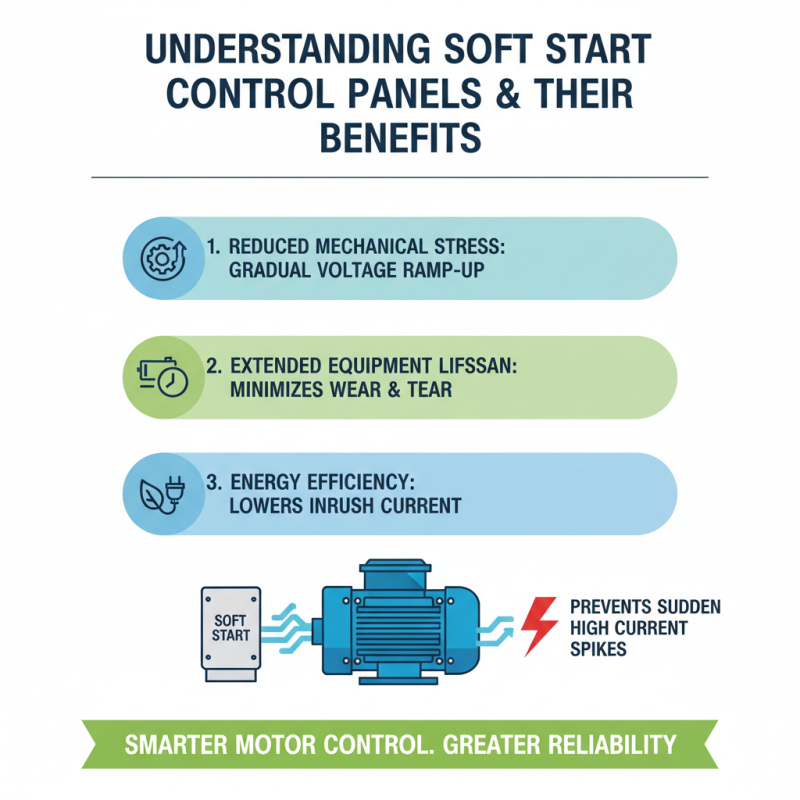
Soft start control panels play a crucial role in enhancing the efficiency of industrial motors. These panels gradually increase voltage to motors at startup, minimizing mechanical stress. This feature not only extends the lifespan of equipment but also reduces energy consumption. When a motor starts suddenly, it draws a high inrush current, which can lead to electrical and mechanical failures. Soft start technology mitigates these issues effectively.
Understanding the benefits of soft start control panels can aid in optimizing operations. They prevent excessive wear on machinery, leading to fewer maintenance issues. Additionally, integrating soft starts reduces the load on electrical systems during startup phases. This not only enhances overall system stability but can also lower energy costs over time. It is vital to assess your specific operational requirements. Not every application may benefit equally from soft start technology, and examining historical performance data can reveal insights.
Regularly reviewing and adjusting settings on soft start panels can lead to further improvements. However, it's crucial to remain aware of potential complications. Poorly configured settings may not provide the desired protection. This inconsistency highlights the need for skilled technicians to oversee operations and maintenance.
Key Components of a Soft Start Control Panel
A soft start control panel is essential for various industrial applications. It helps reduce the inrush current during motor startup. This is particularly valuable in large motors, which can draw up to seven times more current than their rated value. Using a soft start can mitigate potential damage and extend equipment life.
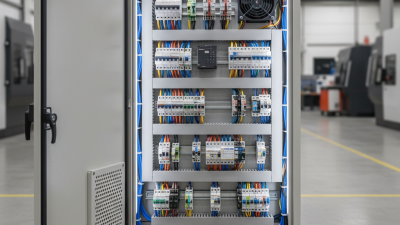
Key components of a soft start control panel include a microprocessor, current sensors, and power modules. The microprocessor enables precise control of the motor’s acceleration and deceleration. This not only improves efficiency but also minimizes wear on mechanical components. According to industry reports, using a soft starter can lower energy costs by 30% over time, highlighting its economic benefits.
Current sensors monitor and adjust power as needed. These sensors ensure optimal performance and can prevent overload conditions. Power modules convert electrical energy efficiently. They are crucial for the effectiveness of the panel. However, incorrect installation or poor maintenance can lead to inefficiencies. Regular assessments are necessary to ensure the reliability of these components.
Top Tips for Using Soft Start Control Panel for Efficiency
The chart above illustrates the percentage of efficiency improvement offered by various key components of a soft start control panel. These components play a crucial role in enhancing the operational performance of electric motors.
Step-by-Step Setup of a Soft Start Control Panel
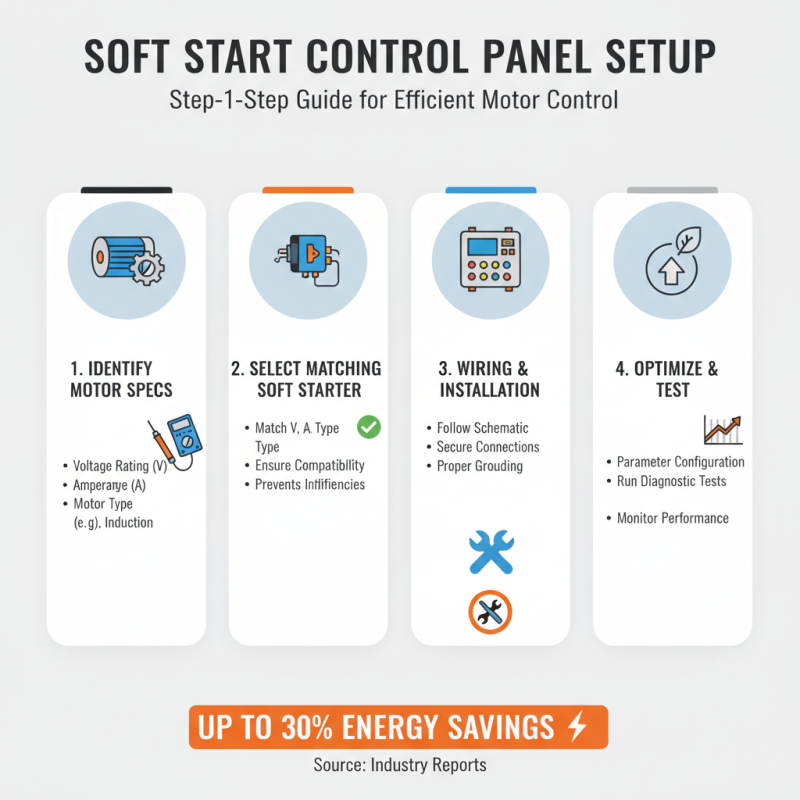
Setting up a soft start control panel requires precision and understanding. Begin with the identification of the motor specifications. Knowing the voltage rating, amperage, and type of motor is crucial. This ensures that the soft starter matches the requirements, providing better control during startup. A mismatch could lead to inefficiencies. Industry reports indicate that proper alignment can reduce energy consumption by up to 30%.
Next, ensure all connections are secure. Loose wiring can lead to fluctuating performance. Notably, a poorly set up panel can cause motor overheating. Many studies highlight that over 60% of motor failures stem from insufficient maintenance or setup errors. Connect the input power supply diligently. Incorrect wiring could result in equipment damage, leading to costly repairs.
Incorporating monitoring tools is equally important. These can provide real-time feedback on the operation. Data suggests that integrating monitoring solutions can enhance efficiency by providing insights into performance trends. Regular check-ups and adjustments are vital. Soft start panels may need recalibration in response to changing operational demands. Each step must be approached with care for optimal functionality.
Best Practices for Operating Soft Start Control Panels
When operating soft start control panels, understanding best practices can enhance efficiency significantly. According to a recent report from the International Electrical Engineering Institute, using soft starters can lead to energy savings of up to 30%. These savings stem from reduced inrush currents during motor startup, which minimizes wear on electrical components.
Regular maintenance of control panels is crucial. Even minor issues can escalate into major failures. A study by the Electrical Maintenance Society highlights that 70% of mechanical failures are due to poor maintenance. To ensure longevity, inspect connections and clean terminals diligently. Keeping the control panel well-ventilated is also essential to prevent overheating, which can compromise performance.
Monitoring performance metrics is another best practice. Use data analytics to identify anomalies in motor operation. The Automation Enhancement Group states that timely interventions based on monitoring can reduce downtime by 40%. By staying alert to these signs, operators can make adjustments proactively, ensuring smoother operation and greater reliability over time.
Troubleshooting Common Issues with Soft Start Control Panels
Soft start control panels are crucial for enhancing operational efficiency. However, users often face common issues that can hinder performance. A report by the International Electrotechnical Commission indicates that improper settings can lead to energy waste, potentially increasing costs by 20%. Many users overlook the importance of regularly checking parameter settings.
One potential problem is an unresponsive panel. This can stem from poor connections or insufficient power supply. Regular maintenance is essential. Check all connections and ensure that the supply meets operational demands. Addressing these aspects can significantly reduce downtime and enhance reliability.
Another common issue is incorrect ramp-up times. Soft starters require precise adjustments to avoid stressing the motor. Uncertainty or guesswork may create harmful conditions. Set the ramp-up time based on specific motor characteristics. This practice can decrease mechanical wear and extend the system’s lifespan.
Consider conducting routine diagnostics. This will help identify misconfigurations and faults early on. Small adjustments can lead to significant improvements. Maintaining proper software updates and calibration enhances overall performance, sustaining efficiency in operation. Ultimately, knowledge and vigilance are key in overcoming challenges with soft start control panels.

 Intelligent Manufacturing / Industry 4.0
 Motor Control Center MCC
 Data Center
 Environmental Industry
 Industrial Machinery
 New Energy
 Pharmaceutical Manufacturing
 Petroleum & Chemical
 Marine & Offshore & Ship
 Food processing / agricultural production