2026 Best Breaker Box Types for Global Buyers?
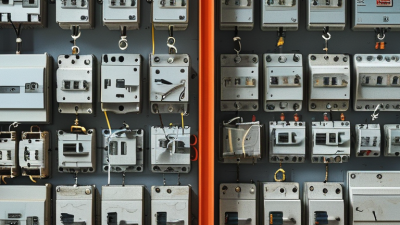
Choosing the right Breaker Box in 2026 requires more than comparing price, amperage, and appearance. Global buyers must match the box with local voltage, frequency, wiring systems, and installation practices. A compact residential load center may suit a small apartment. A main breaker panel may offer better whole-building isolation. Main-lug-only designs can work well downstream, but only when the upstream disconnect is properly planned.
Electrical educator Mike Holt states, “Circuit breakers protect the conductors, not the loads.” That principle should guide every purchase. The breaker rating must match the cable size, equipment capacity, and expected fault conditions. Buyers should also examine busbar material, interrupting rating, enclosure protection, neutral arrangement, grounding facilities, and available circuit spaces. UL, IEC, or other recognized certifications may matter, depending on the destination market. A dusty workshop, humid coastal building, and clean office do not need identical enclosures.
Smart monitoring is attracting attention. It can reveal overload patterns through a mobile dashboard. Yet connectivity does not replace safe design or qualified installation. Some products look advanced but provide limited service support abroad. That weakness is easy to overlook. Warranty terms, replacement breakers, documentation, and local technical assistance deserve equal attention.
There is no universal “best” Breaker Box. The strongest choice depends on the building, region, installer, and future expansion plan. Buyers may still make mistakes when relying on catalog labels alone. Careful verification remains essential, especially when standards and product names differ between countries.
What Is a Breaker Box and How Does It Work?
2026 Best Breaker Box Types for Global Buyers?
What Is a Breaker Box and How Does It Work?
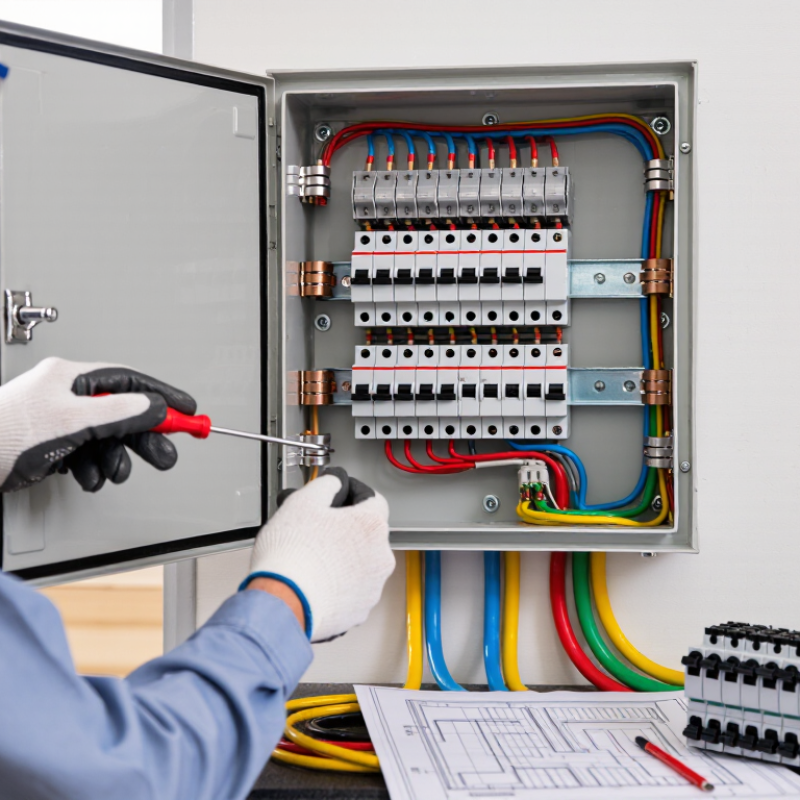
A breaker box, or distribution board, receives incoming electricity and divides it into protected circuits. Each circuit breaker monitors current flow through a thermal and magnetic mechanism. Excessive heat causes a delayed trip, while a short circuit creates an instant magnetic trip. The handle then moves to the middle or off position. The box also separates live, neutral, and grounding conductors. This separation is essential for safe fault clearing.
NFPA’s Home Structure Fires report, covering 2016–2020, found electrical distribution and lighting equipment involved in 46% of home fires caused by electrical malfunction. That figure deserves attention.
For global buyers, breaker box selection depends on voltage, phase, frequency, short-circuit capacity, and enclosure protection. Common choices include thermal-magnetic breakers, electronic breakers, and residual-current devices. An RCD detects leakage to ground, but it may not provide overload protection unless combined with a suitable overcurrent breaker. IEC 60364 principles also emphasize correct coordination between conductors and protective devices. A larger ampere rating is not automatically safer. It can hide undersized wiring and create dangerous overheating. A tidy box can still be poorly specified. That is easy to miss. Check the rated voltage, interrupting capacity, busbar arrangement, IP rating, and local installation requirements before purchase.
Main Breaker Box Types Available to Global Buyers in 2026
In 2026, global buyers can choose several main breaker box types. A main-breaker load center combines the incoming disconnect and branch breakers in one enclosure. It suits homes and small commercial buildings with a defined service entrance. A main-lug-only panel relies on an upstream disconnect. It works well as a subpanel, but designers must confirm the feeder rating and grounding arrangement.
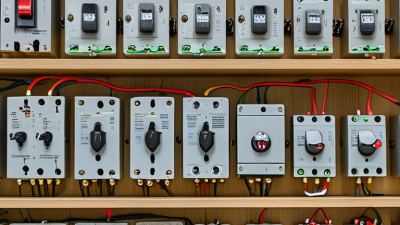
Modular DIN-rail distribution boards are common in international projects. They usually accept miniature circuit breakers, residual-current devices, or combined RCBO units. These panels offer flexible circuit expansion, especially in apartments, workshops, and renewable-energy installations. For larger facilities, metal-clad switchboards or panelboards provide higher fault ratings and better segregation. The correct choice depends on voltage, available fault current, enclosure environment, and future load growth. “Smart” panels add monitoring, yet connectivity alone does not improve protection.
The IEA Electricity 2024 report expects global electricity demand to grow by about 4% annually from 2024 through 2026. The IEA Renewables 2024 report also forecasts roughly 5,500 GW of new renewable capacity by 2030. These trends increase demand for panels that can manage solar inverters, batteries, and bidirectional power flow. Buyers should request test documentation against relevant IEC 61439 requirements and verify breaker coordination with qualified engineers. Product labels can be confusing. A higher ampere rating is not automatically safer, particularly when cable capacity or fault performance is overlooked.
2026 Best Breaker Box Types for Global Buyers
Main breaker box types available to global buyers in 2026
How to read this chart
The chart compares representative maximum incoming current ratings commonly available for major breaker box categories. Main breaker panels and meter-main combinations are widely used where the service disconnect is integrated into the enclosure. IEC consumer units are typically selected for smaller residential installations, while IEC distribution boards are suitable for larger residential, commercial, and light-industrial circuits. Actual ratings depend on local electrical codes, system voltage, short-circuit capacity, enclosure protection, and the installation design.
Reference basis: common nominal ratings used in IEC- and North American-style low-voltage distribution equipment. Values are representative selection points, not market-share data.
How Breaker Box Designs Differ by Application and Capacity
The best breaker box depends less on appearance than on application, capacity, and installation conditions. A compact residential load center may suit a small apartment with single-phase power and limited circuits. Larger homes often need more ways, higher busbar capacity, and space for future circuits. That choice matters.
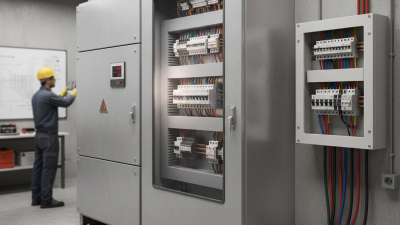
Commercial buildings usually require panelboards with stronger enclosures, clearer circuit identification, and higher continuous-load ratings. Industrial sites may need switchboards or modular enclosures for three-phase systems, motor loads, and frequent maintenance.
Outdoor installations demand weather-resistant construction, sealed cable entries, and suitable ingress protection. Dust and moisture change the design completely. Do not guess.
Capacity is not only the main current rating. Buyers should check voltage, phase arrangement, interrupting capacity, busbar material, breaker compatibility, and available spare spaces. A box rated for 250 amperes may still perform poorly if heat accumulates inside a crowded enclosure. Thermal derating is often overlooked. In real projects, leaving 20 to 30 percent spare capacity can simplify later expansion, although site conditions may require more.
A neat enclosure does not always mean a safe one. Certification must match the destination market, while installation should follow local electrical rules and inspection practices. I have seen specifications fail because they focused on price and ignored cable bending space. That mistake is expensive to correct.
How to Choose the Best Breaker Box for Your Project
2026 Best Breaker Box Types for Global Buyers?
How to Choose the Best Breaker Box for Your Project
Choosing a breaker box starts with the building’s electrical demand, not the enclosure’s appearance. Record the supply voltage, phase arrangement, service rating, and expected loads. A small home may need a compact load center. A workshop could require more spaces and a higher interrupting rating. Leave room for future circuits. Crowded panels create avoidable maintenance problems.
Main-breaker boxes suit installations needing a local shutoff. Main-lug-only boxes can work where another upstream disconnect already exists. For outdoor projects, select an enclosure with suitable weather protection and corrosion resistance. Indoor and damp locations need different construction details. Check temperature, dust, moisture, and available wall space before ordering.
Sizing errors are common. A box may have enough physical spaces but lack the correct bus configuration or breaker compatibility. That detail is easy to miss. Review the wiring diagram with a qualified electrician and confirm regional electrical requirements. Requirements differ across countries and project types. Do not rely only on a seller’s product table.
A practical inspection should verify terminal capacity, neutral and grounding arrangements, labeling, enclosure depth, and spare capacity. I have seen projects delayed because conduit entered from the wrong side. Measure twice. Also confirm the box accepts the intended conductor sizes and protective devices. A reliable choice balances safety, expansion, climate resistance, installation access, and documented testing.

 Intelligent Manufacturing / Industry 4.0
 Motor Control Center MCC
 Data Center
 Environmental Industry
 Industrial Machinery
 New Energy
 Pharmaceutical Manufacturing
 Petroleum & Chemical
 Marine & Offshore & Ship
 Food processing / agricultural production